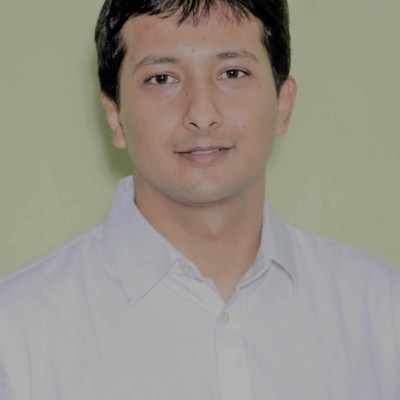
Harit Soni
Co-founder, Product Strategy
Two-time founder. Raised $22M. 15+ years building and scaling cleantech, IoT and AI across Asia, the UK and North America.
A corporate bond is re-priced daily. A data centre portfolio is scored once, at construction, and again at acquisition. Sono keeps a live, agent-read score on every asset you hold and every site you're evaluating, so risk is priced the day it moves, not the year it's discovered.
A corporate bond is re-priced daily. A €5 billion data centre portfolio is scored once, at construction, and again at acquisition, by a consultant. Equipment wears down, contracts renew, insurance terms shift, climate and grid conditions move — the risk keeps moving, and nobody is looking.
Price assets on data that's already out of date by the time it reaches the investment committee.
Find out about failure risk after it happens, not before.
Underwrite on a survey that's eleven months old, so exposure builds between renewals and prices at the wrong risk.
Unplanned failure is the more carbon-intensive outcome — emergency replacement instead of planned end-of-life.
The stranded-asset situation in Ireland wasn't a failure of ambition or capital. It was a failure to track one risk factor — grid capacity — continuously, before it became a binding constraint. When the grid operator froze new connections, projects that looked viable at acquisition had no path to power.
Sono runs a network of agents that read contract terms, insurance terms, manufacturer documentation and external conditions for every asset, continuously. Portfolio Management covers what you already hold; Portfolio Expansion covers what you're evaluating.
The same plot can look very different depending on what grid capacity is actually available, whether the water basin is under stress, or how many competing facilities are already queued for permits nearby. Sono combines those signals into a single score, calibrated against a growing reference population of European sites, so you can compare candidates on a common basis before committing capital.
No instrumentation required. One category — grid capacity, climate exposure, regulatory trajectory — because the question at this stage is narrow: should you commit capital here at all.
Management asks one question: what is happening to the assets we already hold. The agents cross-reference contract, insurance and manufacturer documentation against each asset's actual condition, continuously, not at review time.
Five categories, one live state per asset: revenue, capex cycles, opex, compliance and insurance, each scored and updated as the inputs move. Financial impact is projected forward in euros today, and the year it crosses your action threshold.
Portfolio-level. No site visits. The agent states what it found, what it costs, and the next step to take.
The largest of the five categories: predictive maintenance, anomaly detection, and setpoint optimisation delivered to operations teams in plain language. Sono reads your existing historian, detects failure modes before alarms fire, traces root cause to specific equipment, and surfaces ranked recommendations with a confidence score.
No new hardware. No integration project. Historian-native. Physics-constrained so no physically impossible setpoint can ever be suggested.
Ranges are Sono's modelled estimates for a 60 MW colocation asset, to be replaced with pilot-measured figures once the first deployment closes.
Internal and external data — 30+ sources in — mapped through category models onto the levers an owner actually pulls.
SLA and uptime breach avoidance, stranded capacity monetisation.
Asset refresh and end-of-life timing.
Energy, predictive maintenance, labour, downtime and SLA penalties, and six more.
Contractual and SLA compliance.
Fire and water damage, climate and catastrophe hazard exposure.
Grid and power diligence, climate hazard zoning, permitting risk, and two more.
Three co-founders combining ML, energy infrastructure and commercial execution.
Co-founder, Product Strategy
Two-time founder. Raised $22M. 15+ years building and scaling cleantech, IoT and AI across Asia, the UK and North America.
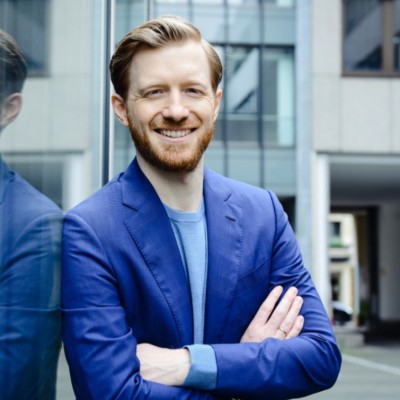
Co-founder, Commercial
12+ years commercial leader. Former CEO of a green-gas spin-off. Led M&A across wind, PV and biomethane.
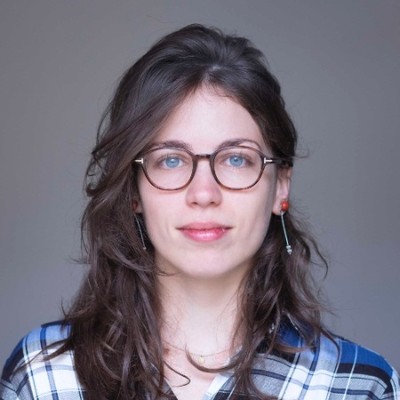
Co-founder, Technology
Physicist and Data Scientist. 10+ years experienced in signal processing & ML, IoT monitoring and industrial processes.
Data centres carry risk across five dimensions simultaneously. The data to track most of it already exists. Sono reads it, structures it, and gives your team something to act on.
We work with colocation operators, infrastructure fund managers, and OEM partners across Europe.